
Follow us


Mountaineering Autonomy & Safety course Level 2
Duration:
4 days
Price from: 1 020€
Fitness:


Infobulle physique
Physical Level 1: For individuals who engage in occasional physical activities, positive elevation gain of up to 300m.
Physical Level 2: For individuals who engage in regular physical activities, positive elevation gain of up to 600m or routes above 3500m.
Physical Level 3: For individuals who engage in regular endurance activities, positive elevation gain of up to 900m or routes above 4000m.
Physical Level 4: For individuals who engage in regular endurance activities, positive elevation gain of up to 1300m.
Physical Level 5: For individuals who engage in intensive endurance activities, positive elevation gain exceeding 1300m.
Technique:
Infobulle technique
Technical Level 1: For regular hikers wishing to discover mountaineering. The route is not very steep and is well-marked, or the activity may also take place in beginner-friendly areas.
Technical Level 2: For experienced hikers wishing to discover mountaineering. The route includes short, steep sections and may involve scree or rocky ridges, requiring surefootedness.
Technical Level 3: For occasional mountaineers (2 to 5 recent outings). The route includes steep sections requiring prior climbing experience at a French grade 3c level and/or mastery of crampons and ice axe use.
Technical Level 4: For regular mountaineers (5 to 10 recent outings). The route requires climbing at a French grade 4c level and mastery of mountaineering techniques, including the use of crampons and an ice axe, as well as basic roping and belaying techniques.
Technical Level 5: For experienced mountaineers (more than 10 recent outings). The route requires climbing above a French grade 4c level and mastery of mountaineering techniques, including the use of crampons and ice axes for ice climbing, as well as advanced roping and belaying techniques.
General information
The Autonomy & Safety mountaineering program
Our Autonomy & Safety courses form a progressive training program designed to help you develop, step by step, the skills required to undertake mountaineering ascents independently. Each level introduces new technical and risk management skills, which are then put into practice on high mountain routes. With 3 to 4 participants per guide, the small group size allows for personalised instruction and active participation in the preparation and completion of each route.
Autonomy & Safety - Level 2: ridge climbing
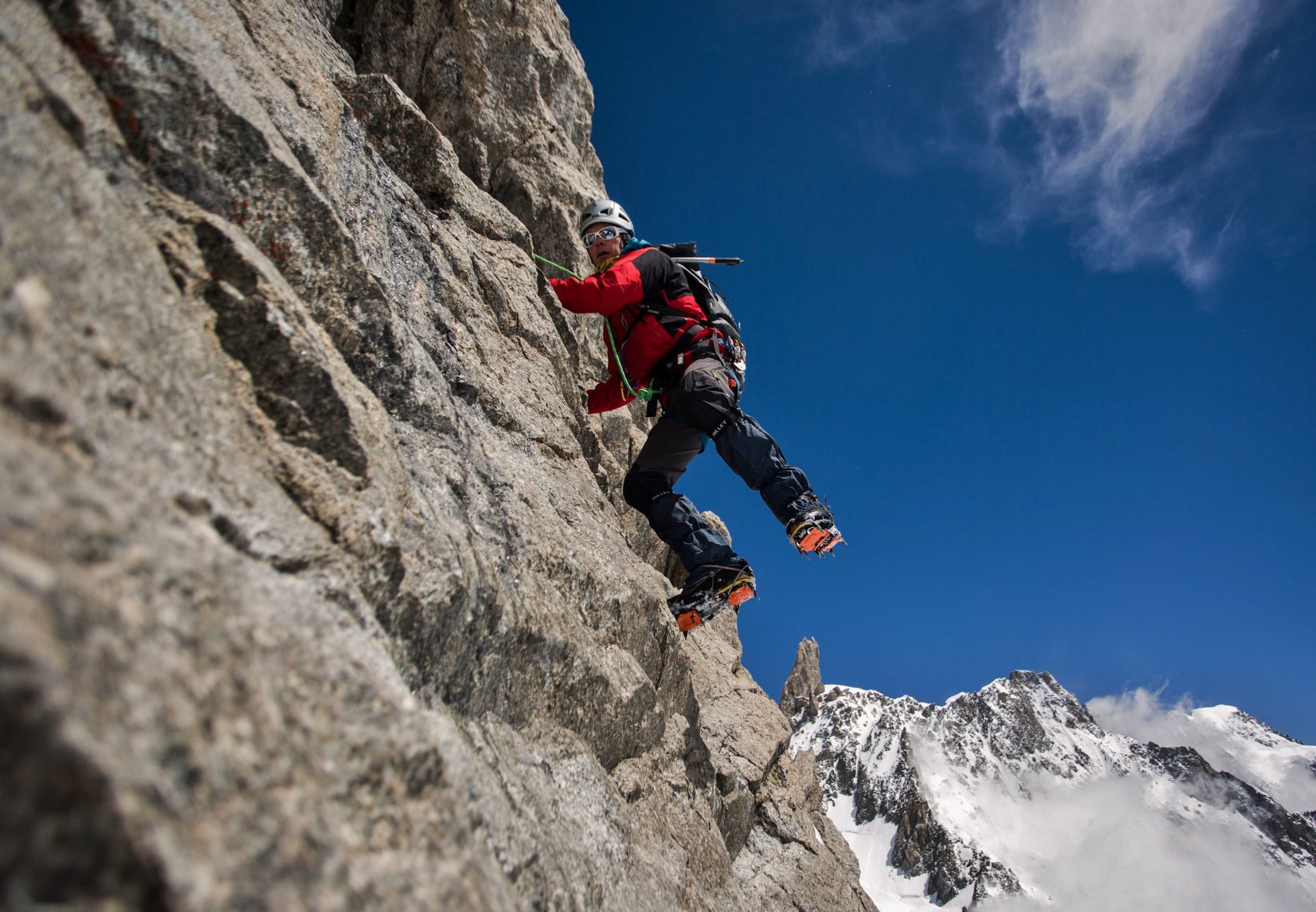
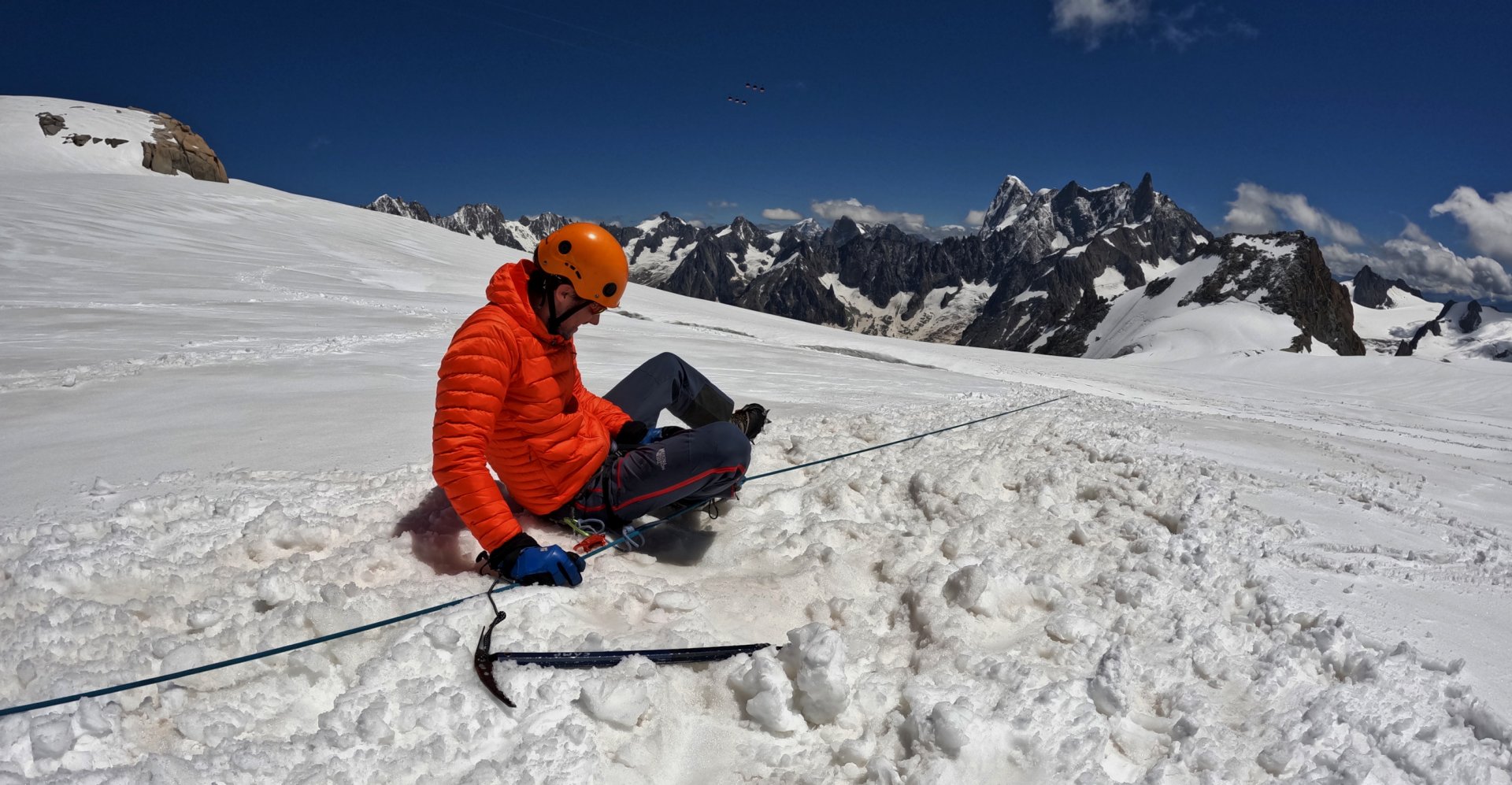
Level 2 is the second stage of the program and focuses on progression and safety on alpine ridges. After two days dedicated to multi-pitch climbing and ridge climbing techniques, you head to the Cosmiques Hut, in the heart of the Mont Blanc massif. You consolidate your glacier safety skills with a crevasse rescue exercise in real conditions before putting the techniques learned during the course into practice on a mixed alpine route.
This course is the natural progression from our Autonomy & Safety - Level 1 course. You must be confident with climbing belay techniques, including abseiling, and be able to lead French grade 4c. You must also know the basics of crevasse rescue and have already completed a glacier route graded F/PD- independently.
🎯 Course objectives
- Consolidate glacier safety and crevasse rescue skills
- Learn the fundamentals of moving safely and efficiently on alpine ridges
- Develop your ability to prepare a route and manage risks using decision-making tools
Group booking
The group option brings together participants who may not know each other. It allows you to follow a set program on fixed dates while benefiting from an attractive price and the friendly atmosphere of a group.
Dates
See the group booking module below.
Price 2027
€1020 per person, based on a minimum of 3 participants.
✅ This price includes
- IFMGA English-speaking mountain guide
- Half-board accommodation at the Cosmiques Hut on Day 3 (dinner, overnight stay and breakfast)
- Lift access required for the routes included in the program
❌ This price does not include
- Accommodation in the valley during the course
- Picnic lunches
- Transport to the meeting points
- Personal technical equipment
Private booking
The private option allows you to take this course with your own group and benefit from instruction tailored to your needs. You can choose your departure date subject to hut availability, and the program can be adjusted according to your level and progression.
Prices 2027
2 people: €1765 per person
3 people: €1265 per person
4 people: €1020 per person
✅ This price includes
- IFMGA English-speaking mountain guide
- Half-board accommodation at the Cosmiques Hut on Day 3 (dinner, overnight stay and breakfast)
- Lift access required for the routes included in the program
❌ This price does not include
- Accommodation in the valley during the course
- Picnic lunches
- Transport to the meeting points
- Personal technical equipment
Further information
To prepare for your course, please read our guides’ tips, which provide practical advice and recommendations for your mountaineering trip.
Meeting point
Meet at 8.30am on Day 1 at the Compagnie des Guides de Chamonix office, 190 place de l’Église.
Fitness level
Regular endurance training is required. You should be prepared for up to 7 hours of activity per day.
Technical level
Previous mountaineering experience is required. You should already have completed several high mountain routes. This course is the natural progression from Autonomy & Safety - Level 1.
Prerequisites
You must be confident with climbing belay techniques, including abseiling, and be able to lead French grade 4c. You must also know the basics of crevasse rescue and have already completed a glacier route graded F/PD- independently.
Guiding policy
The group consists of 3 to 4 participants per guide, allowing for progressive learning and personalised instruction. Registration is open to participants aged 18 and over.
Accommodation
One night in a mountain hut on a half-board basis is included on Day 3 (dinner, overnight stay and breakfast).
⚠️ Formalities
Insurance covering mountain rescue and repatriation is mandatory. If you are not already insured, rescue, repatriation and cancellation insurance can be purchased when booking. A valid ID is also required.
Documents available for download
Equipment
We recommend taking particular care when choosing your equipment, as it contributes to your comfort and the smooth running of the course. Weight is an important consideration: choose lightweight, suitable equipment while ensuring adequate protection for high mountain conditions.
Equipment
- A backpack of approximately 35 litres
- Climbing shoes, available for rent
- Mountaineering boots, available for rent
- Gaiters, if required with your trousers
- Telescopic trekking poles, available for rent
- Crampons with anti-balling plates, a helmet, harness and straight ice axe, available for rent
- Mandatory technical equipment: 1 double lanyard, 1 directional screwgate carabiner, 1 reversible belay device with a screwgate carabiner, 2 ice screws (16 cm) with straight-gate carabiners, 2 slings (120 cm) with straight-gate carabiners, 1 Micro Traxion with a screwgate carabiner, 1 Tibloc with a screwgate carabiner, 1 Prusik (minimum 50 cm) with a screwgate carabiner, 5 quickdraws, 3 Camalot-type cams (0.3, 0.5 and 0.75) with straight-gate carabiners, 1 pear-shaped screwgate carabiner
Clothing
- A warm hat compatible with a helmet
- A sun hat or cap
- A neck warmer such as a Buff
- A long-sleeved technical base layer
- A fleece
- A waterproof hooded jacket such as Gore-Tex
- A lightweight down jacket
- Thermal leggings
- Trousers suitable for summer mountaineering
- Waterproof overtrousers such as Gore-Tex, available for rent
- Socks suitable for hiking and mountaineering
- Warm gloves, available for rent
- Lightweight gloves
- A change of clothes for the night in the mountain hut
Accessories
- Category 4 sunglasses
- A headtorch
- A sleeping bag liner
- A water bottle of at least 1.5 L
- Earplugs
- A personal first aid kit including at least sunscreen, lip balm, blister treatment, as well as your usual medication for headaches and nausea
- A waterproof pouch containing your ID and some cash
Our Rental Partners
You can rent your equipment at preferential rates from our partner shops: Millet (excluding crampons, ice axes and helmets), Ravanel & Co, Sanglard Sports and Concept Pro Shop.
Our Equipment Partners
Millet, Dynastar, Julbo, Grivel and Monnet.
Itinerary
Day 1
Rock Climbing in the Valley
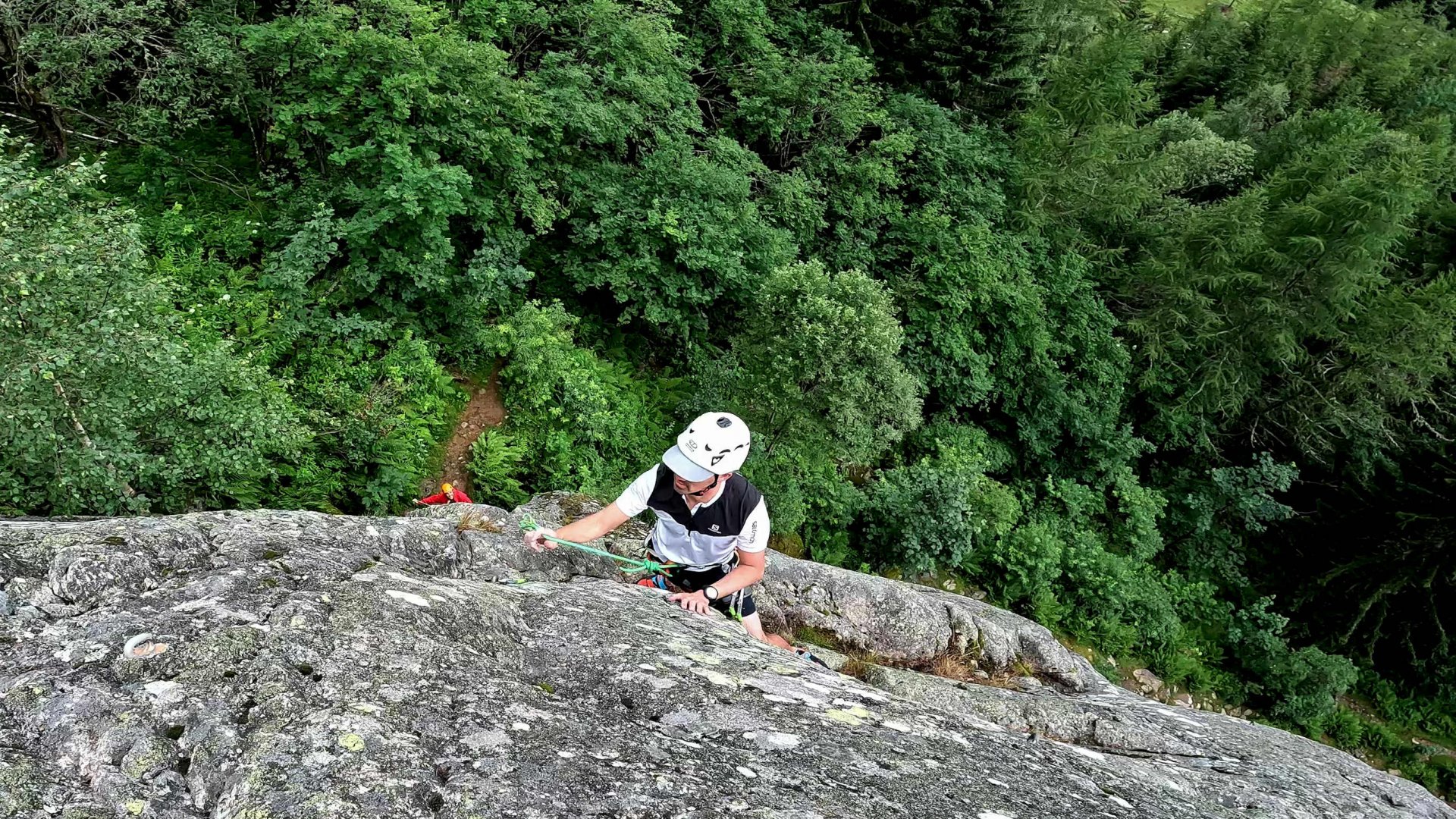
Day at the Gaillands climbing crag dedicated to consolidating roping and belaying techniques, with an introduction to the techniques used on multi-pitch routes. Overnight in the valley.
Day 2
Brévent Foothills (2525 m)
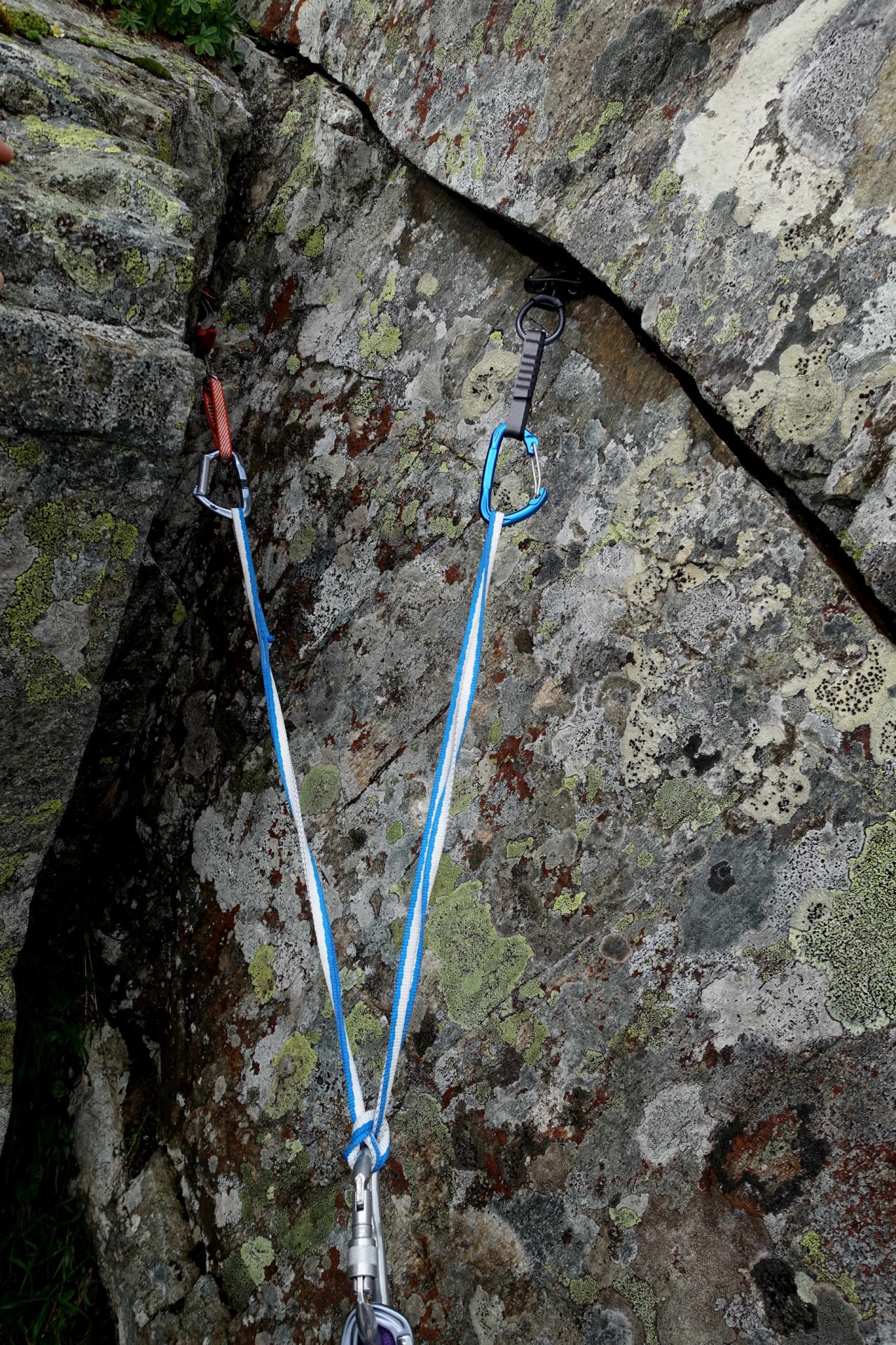
Learn short-roping techniques on rocky terrain and how to move in short pitches. Practice placing protection and using natural rock features for belaying. Overnight in the valley.
Day 3
Aiguille du Midi (3842 m) | Overnight at the Cosmiques Hut
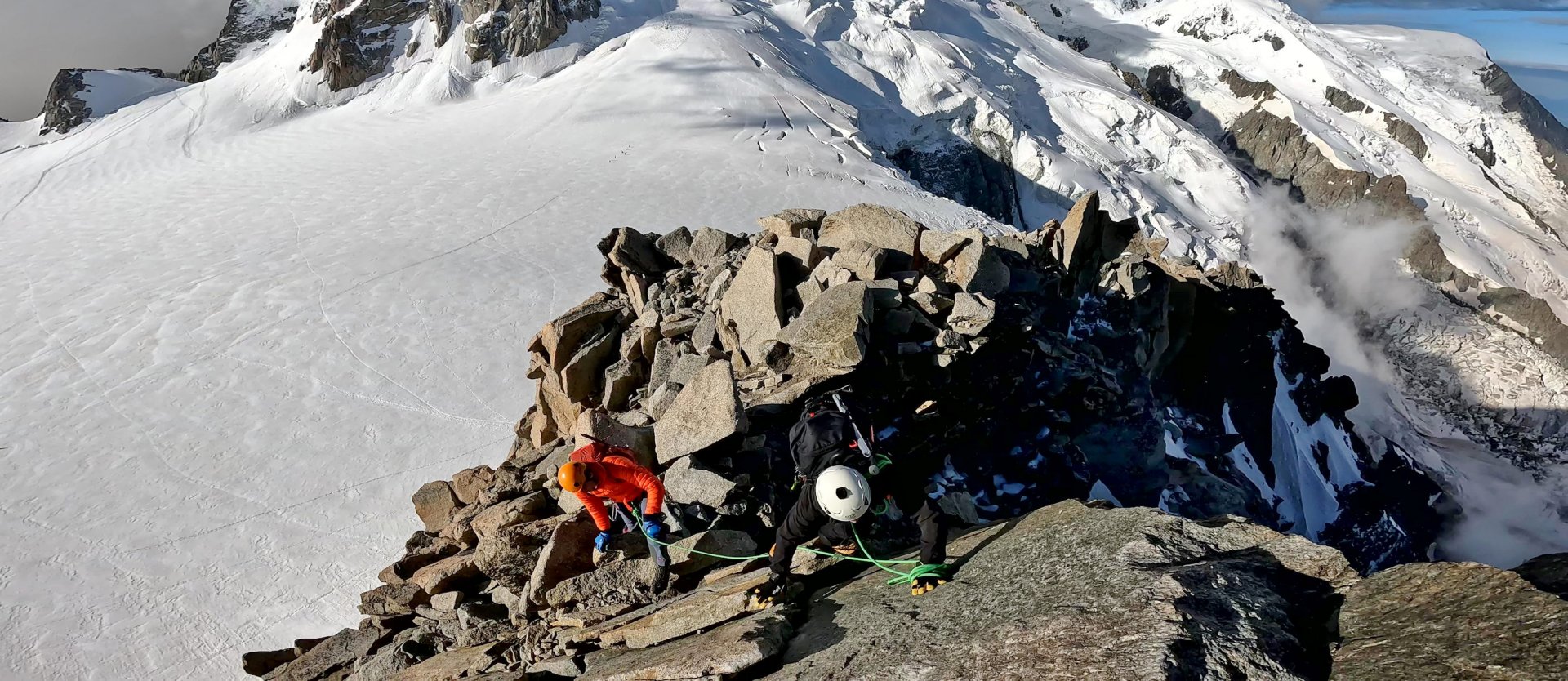
Consolidate glacier safety techniques with a crevasse rescue exercise in real conditions, then complete an alpine ridge route to put into practice the techniques learned during the previous days. Depending on conditions, the Arête à Laurence (3613 m) may be considered. Overnight at the Cosmiques Hut.
Day 4
Ascent from the Cosmiques Hut
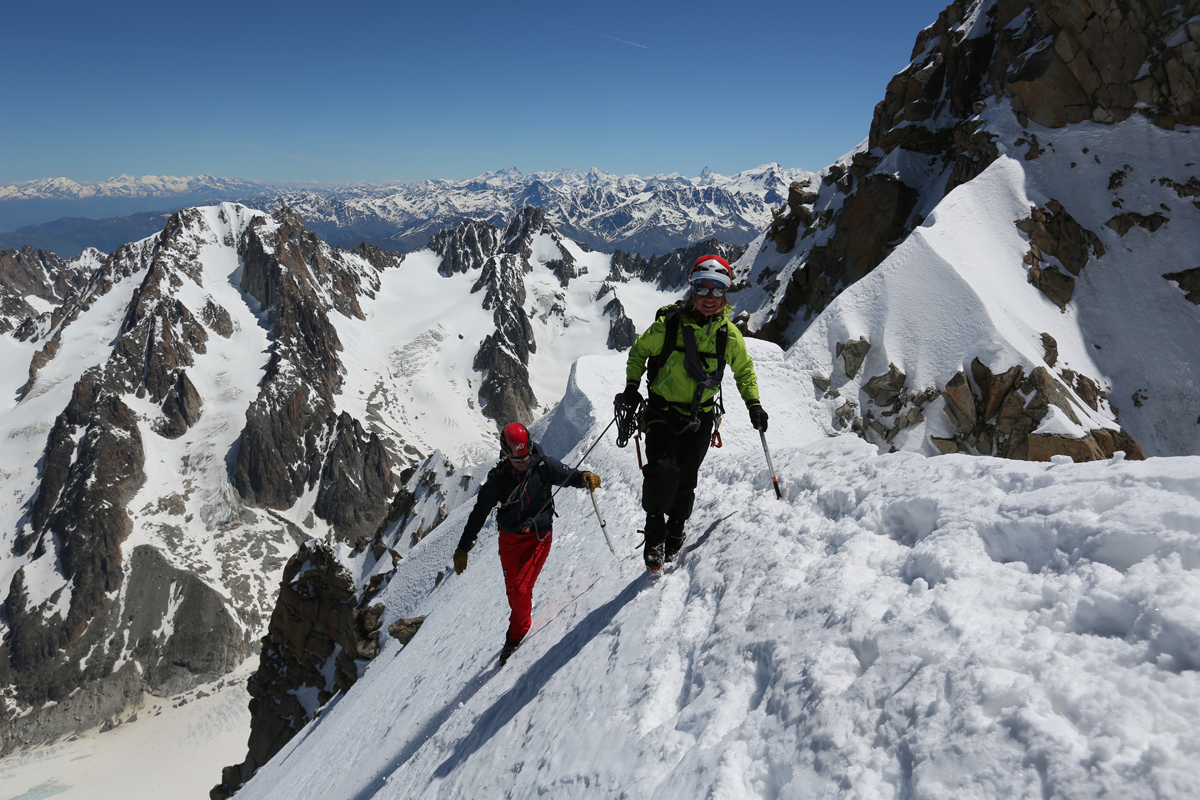
Complete a route in the Vallée Blanche basin, putting into practice the techniques used to move safely and efficiently on alpine ridges. Depending on the conditions and the level of the group, different ascents may be considered, including the North Ridge of the Petit Flambeau (3440 m) or the Pointes Lachenal (3613 m). Return to the valley in the early afternoon.
×
Booking
Book your activity
Calculate your carbon footprint
Discover the carbon emissions of this activity and add your trip to the meeting point.
CO2 emitted per person for the activity: 59 kg. Learn out more about the footprint calculation of this activity
CO2 emitted per person for the activity: 59 kg. Learn out more about the footprint calculation of this activity
CO2 emitted per person for this activity & journey(s) = 0 kgIn order to limit global warming to +2°C by 2100, the COP-21 agreement stipulates that each human should emit no more than 2t of CO2 per year. According to the French Ministry of Ecology, today European citizens emit an average of 11t per year, and American citizens emit an average of 21t annually., or 5.9€The price for a ton of CO2 is currently 100€ in the European Union to offset.
Find out more about our zero impact strategy.
x