Follow us


Tour du Mont Blanc Premium
Duration:
8 days
Price from: 3 600€
Fitness:


Infobulle physique
Physical Level 1: For individuals who engage in occasional physical activity, positive elevation gain up to 250m or distance up to 5km.
Physical Level 2: For individuals who engage in regular physical activity, positive elevation gain up to 500m or distance up to 10km.
Physical Level 3: For individuals who engage in regular endurance activities, positive elevation gain up to 1000m or distance up to 20km or multi-day routes with carrying personal belongings for the day.
Physical Level 4: For individuals who engage in regular endurance activities, positive elevation gain up to 1400m or distance up to 25km or multi-day routes with carrying personal belongings for the duration of the trek.
Physical Level 5: For individuals who engage in intensive endurance activities, positive elevation gain exceeding 1400m or distance exceeding 25km.
Technique:
Infobulle technique
Technical Level 1: For walkers, capable of navigating wide mountain trails suitable for vehicles.
Technical Level 2: For occasional hikers, capable of navigating non-technical mountain trails.
Technical Level 3: For regular hikers, capable of navigating slightly uneven mountain trails with roots or rocks.
Technical Level 4: For experienced hikers, capable of navigating rugged mountain trails with boulders, large steps, or exposed sections.
Technical Level 5: For seasoned hikers, capable of navigating off-trail routes or mountain trails with equipped sections, such as cables or ladders.
Comfort :

Level 1. The comfort of your stay is minimalist. You sleep in a tent and carry your personal belongings throughout the stay.
Level 2. The comfort of your stay is limited. You mostly sleep in refuges or hostels, in dormitories, and carry your personal belongings throughout the stay.
Level 3. The comfort of your stay is intermediate. You mostly sleep in refuges, hostels, or hotels, in dormitories. Assistance is provided for the transport of your personal belongings, when possible.
Level 4. The comfort of your stay is high. You mostly sleep in hotels, in rooms. Assistance is provided for the transport of your personal belongings, when possible.
Level 5. The comfort of your stay is very high. You mostly sleep in 3- or 4-star hotels in rooms. Assistance is provided for the transport of your personal belongings, when possible.
General information
The Luxury Tour du Mont Blanc in 8 Days
Discover the Tour du Mont Blanc on a trip combining hiking, comfort and cultural experiences. Over eight days, you explore some of the most beautiful landscapes of the Mont Blanc massif across France, Italy and Switzerland. To enrich your experience, we have included a visit to the vineyards of the Swiss Valais with a wine tasting, as well as an excursion to Pointe Helbronner (3,462 m / 11,358 ft), reached by the Skyway Monte Bianco cable car.
Accommodation Selected for Comfort
We have selected 3- and 4-star hotels, offering double or twin rooms, so you can relax and enjoy your evenings after each day's hike. One night in a mountain hut, in the heart of Val Montjoie, completes the experience with a taste of traditional Alpine life. Thanks to luggage transfers, you hike with a light daypack throughout the trip, except for the night in the mountain hut.
Personalised Guiding and Dedicated Logistics
Limited to 7 participants, our Luxury Tour du Mont Blanc benefits from additional support provided by two qualified hiking guides with complementary roles. One leads your group along the trails, while the other coordinates the trip logistics, including transfers, luggage handling and picnic arrangements. You can fully enjoy the hikes and experiences along the way without having to worry about the practical details.
Group booking
The group option brings together participants who may not know each other. For a set programme, it offers an attractive price on fixed departure dates. This option is ideal for those who enjoy the friendly atmosphere of a group. Already a group of friends and looking to share a special experience together? Consider the private option!
👉️ We have been guiding people in the mountains since 1821
👉️ Enjoy the expertise and personal attention of our hiking professionals
👉️ Travel in a small group of no more than 7 participants with dedicated logistical support
Dates
See the booking module. The departure will be confirmed once the minimum number of participants (5 people) has been reached by the trip confirmation date.
2027 Price
€3,600 per person
✅ The price includes
- Trip organisation
- Guiding by a qualified hiking guide and dedicated logistical coordination throughout the trip
- Accommodation: 6 nights in double or twin rooms in 3- or 4-star hotels and 1 night in a mountain hut in a mixed dormitory with shared bathroom facilities
- Breakfasts and picnic lunches from the second day through to the last day
- Dinners, except on the fifth day (one set menu for the entire group, excluding special diets and allergies)
- Lifts and excursions included in the itinerary
- Transfers throughout the trip, mainly by a dedicated private vehicle, with local taxis in Val Veny and Val Ferret
- Transfer of one soft travel bag per person, weighing no more than 15 kg (33 lb), except for the mountain hut stay on the seventh stage
❌ The price does not include
- Dinner on the fifth day
- Personal expenses: souvenirs and drinks
- Any costs resulting from a participant’s personal decision to modify the itinerary or inability to complete a stage (additional transfer or lift, accommodation...)
- Mandatory repatriation insurance and strongly recommended cancellation insurance
- Booking fees
- Anything not listed under “The price includes”
Private booking
Would you like to hike with family or friends? With the private option, you can choose your departure dates, subject to accommodation availability. Together with our advisors, you can create a trip tailored to your plans. Duration, itinerary, difficulty level, accommodation and pace: we help you make the right choices to design a programme that suits your group, preferences and objectives.
Enjoy a trip designed around you, benefiting from our local mountain expertise and comprehensive trip organisation and logistics.
The price per person decreases as the group size increases.
Further information
In this section, you will find all the information you need about this trip. For any additional information, please contact our advisors.
Meeting Point
Meet at 8:30 a.m. on the day of departure at the Compagnie des Guides reception desk in Chamonix. An optional briefing is held at 6:00 p.m. the previous evening at our reception desk, giving you the opportunity to meet the group and finalise the last details with your hiking guide. If you cannot attend, please let us know.
On the last day, your arrival time depends on the group's pace and conditions. You will also need to collect your luggage, which will be delivered to the Compagnie des Guides reception desk in the late afternoon. For your return journey, we recommend booking your departure as late as possible that evening or for the following day.
Technical Level
The itinerary does not involve any particular technical difficulties, but follows mountain trails that can be steep and rugged.
⚠️ In June, snow may still be present at higher elevations, making some sections more challenging.
Fitness Level
You should be able to hike 12 to 15 km (7.5 to 9.3 miles) with 700 to 1,000 m (2,300 to 3,280 ft) of elevation gain per day, at an average uphill pace of 350 to 400 vertical metres per hour (1,150 to 1,310 ft/h), carrying a daypack. Regular physical activity is essential, and previous experience of multi-day hiking is strongly recommended.
If you are unsure about your fitness level, please contact our advisors before booking.
Accommodation
6 nights in double or twin rooms in 3- or 4-star hotels. Participants booking individually will share a room with another member of the group. Depending on the group composition, we cannot guarantee that you will share with someone of the same gender.
1 night in a mountain hut in a mixed dormitory, with shared bathroom facilities.
⚠️ Depending on availability, the planned accommodation may be replaced by an establishment offering an equivalent level of comfort. This may involve additional transfers at the beginning or end of the day.
⚠️ Accommodation in Chamonix before and after the trip is not included. You can find a list of our partner hotels in the Booking and Cancellation section of the FAQ.
Meals
Breakfasts and picnic lunches are included from the second day through to the last day. Six dinners are included; dinner on the fifth day is at your own expense. Please indicate any dietary requirements or allergies in your booking information.
Transfers and Lifts
The lifts included in the programme and the transfers required between certain stages are included. A private vehicle is dedicated to the trip and managed by our team. In Val Veny and Val Ferret, transfers are provided by a local taxi company.
⚠️ At the beginning and end of the season, the itinerary may be adapted depending on lift opening dates.
Luggage
The transfer of one bag weighing no more than 15 kg (33 lb) per person is included. Your bag must be soft-sided and durable. Bags exceeding the weight limit will not be accepted by the transport provider.
⚠️ You will not have access to your luggage during the mountain hut stay on the seventh stage. You must carry everything you need for that night in your backpack.
Itinerary
Distances and elevation gains are indicative. Your hiking guide may adapt the itinerary depending on mountain conditions and the group's abilities.
Guiding
The trip is led by a qualified hiking guide, with dedicated logistical support. Groups consist of 5 to 7 participants aged 16 and over. Minors must be accompanied by a parent or legal guardian.
Formalities
You must have insurance covering search and repatriation costs in all three countries visited, as well as a valid identity document. Cancellation insurance is strongly recommended. We offer combined assistance, repatriation and cancellation insurance, which can be purchased when booking (available to EU and UK residents only). You can find the list of eligible countries of residence in the Booking and Cancellation section of the FAQ.
For European residents, we also strongly recommend bringing a European Health Insurance Card.
Documents available for download
Equipment
Take special care when choosing your gear to maximise your chances of success. Stick to the essentials to keep your backpack as light as possible. This equipment list is provided to help you pack. It has been tested and approved by our guides. We recommend following it when deciding what to pack. You can find the list of our Equipment and Rental partners in the Practical Information section of the FAQ.
Backpack and luggage
- A 30-litre backpack
- One soft, durable travel bag, maximum 15 kg (33 lb)
Clothing
- Breathable long- and short-sleeved T-shirts
- A lightweight fleece jacket
- A warm, lightweight and packable insulated jacket
- A waterproof jacket (e.g. Gore-Tex)
- Hiking trousers
- Shorts
- Waterproof trousers (e.g. Gore-Tex)
Footwear and evening wear
- Hiking socks
- A pair of high-cut hiking boots with a good sole
- A change of clothes for the evening
- A pair of lightweight shoes for the evening
- A swimsuit (some hotels have spa facilities available to guests)
Protection and hiking accessories
- A pair of telescopic trekking poles
- A rain poncho
- A pair of gloves
- A beanie
- A hat or cap
- A pair of Category 3 sunglasses
Personal equipment and essentials
- At least 2 litres of water (water bottle, hydration bladder or other containers)
- A pocket knife and a spork
- A few small waste bags to carry your waste with you
- A torch or headlamp
- A sleeping bag liner for the night in the mountain hut
- Sunscreen and lip balm
- A basic toiletry kit: towel, earplugs and toilet paper
- A small personal first-aid kit: Compeed-style blister dressings and medication for common ailments such as diarrhoea, constipation, sore throat, headaches, aches and pains, and allergies (your guide carries a first-aid kit)
Documents and money
- A valid form of identification
- Money for personal expenses (euros and Swiss francs)
⚠️ The weather changes quickly in the mountains
Even in the middle of summer, you may encounter all kinds of weather. Make sure you bring adequate protection against rain and cold.
Itinerary
Day 1
Aiguilles Rouges Massif
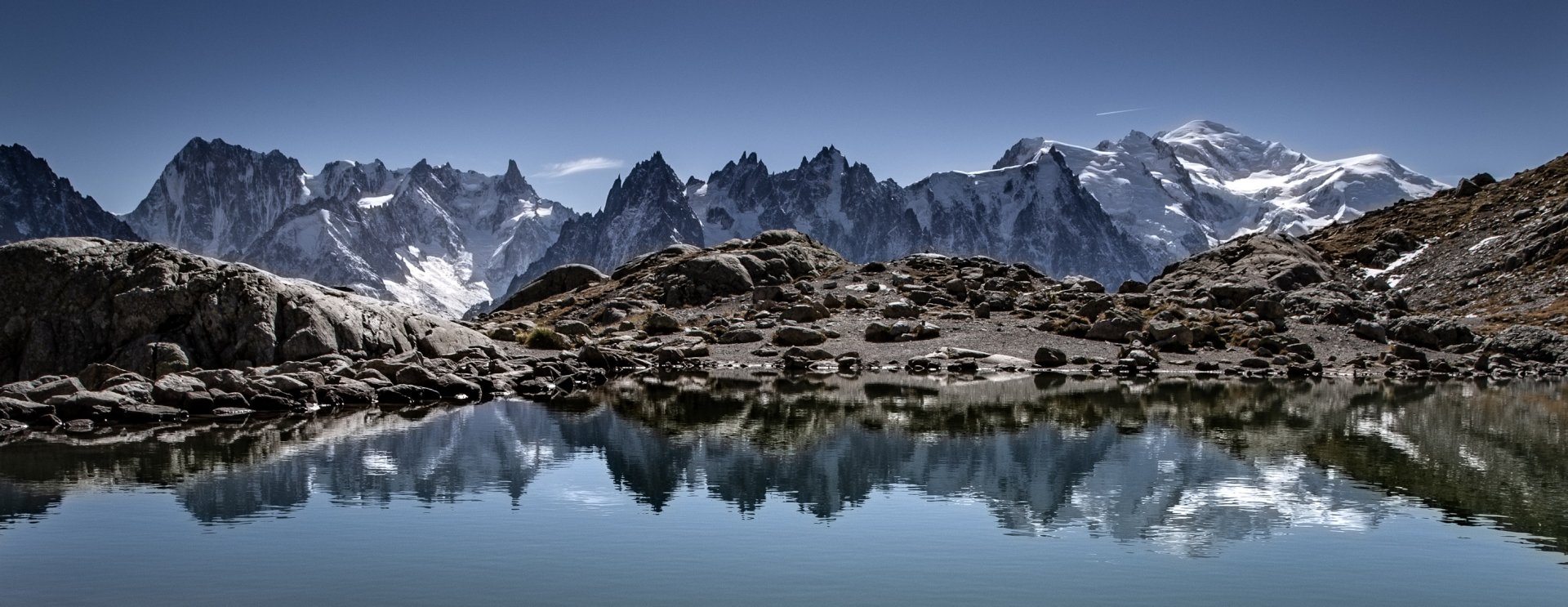
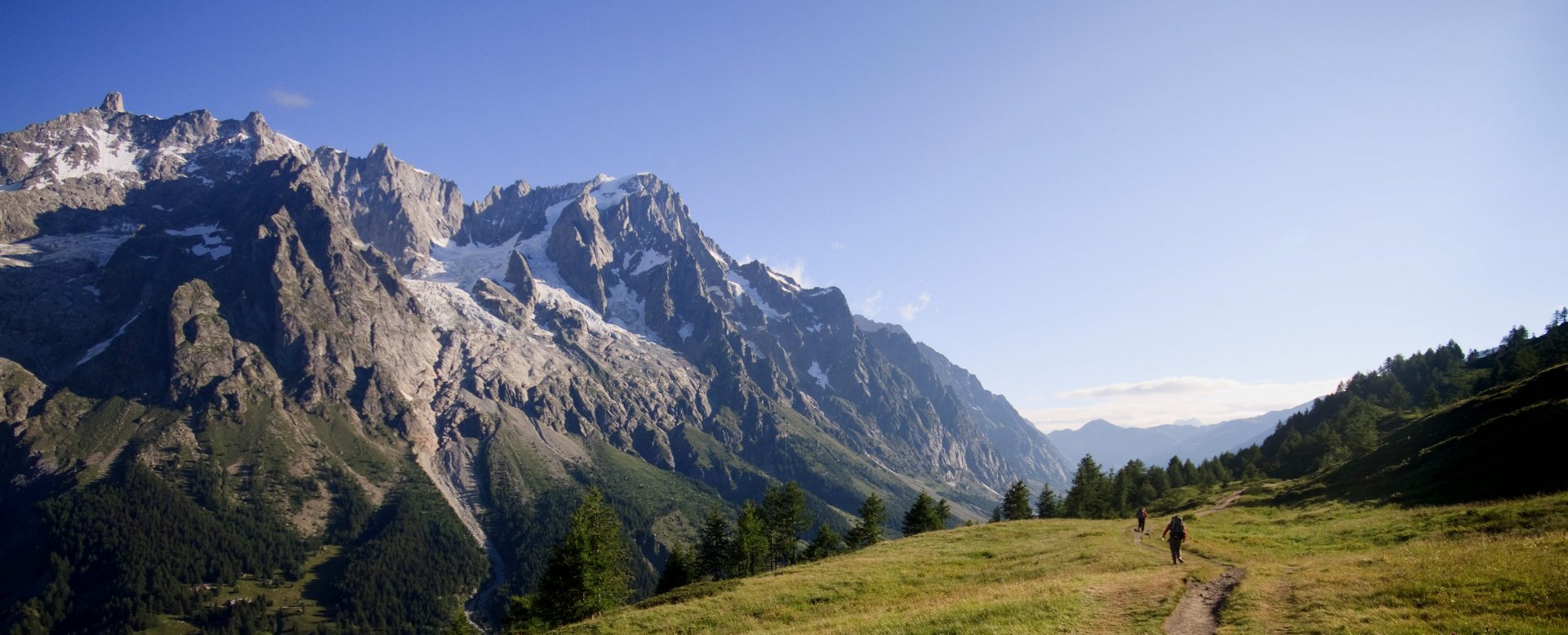
We begin our trip in the heart of the Aiguilles Rouges massif, facing Mont Blanc. From our very first hike, we enjoy spectacular views of the surrounding peaks. Overnight in a hotel.
Elevation gain: 700 to 1,200 m (2,300 to 3,940 ft) - Elevation loss: 700 to 1,200 m (2,300 to 3,940 ft) - Distance: 9 to 12 km (5.6 to 7.5 miles)
Day 2
Swiss Valais
A short transfer takes us to the picturesque village of Le Tour (1,450 m / 4,757 ft), at the head of the Chamonix Valley. Our first objective is the Col de Balme (2,191 m / 7,188 ft), on the border between France and Switzerland. From the pass, we leave Mont Blanc and the Chamonix Valley behind as we descend towards the village of Trient (1,320 m / 4,331 ft). A short transfer then takes us to the hills above Martigny. We head towards the vineyards of Plan-Cerisier for a guided visit and wine tasting. Overnight in a hotel.
Elevation gain: 800 m (2,625 ft) - Elevation loss: 900 m (2,950 ft) - Distance: 12 km (7.5 miles)
Day 3
Rhône Valley
From Forclaz pass we walk towards the Giète alpine pasture (6,180ft). The local "Hérens" cows greet us with their cowbells as the cheesemaker diligently works with the milk from the first milking. Our trail now ascends to Col de Portalo (6,722ft). Overlooking the great Rhône Valley, the viewpoint is superb. It's time to descend to the charming village of Champex-Lac (4,920ft), affectionately known by its residents as "Little Canada." Overnight in a hotel.
Elevation gain: 2,300 feet - Elevation loss: 2,600 feet - Distance : 8.5 miles
Day 4
Val Ferret
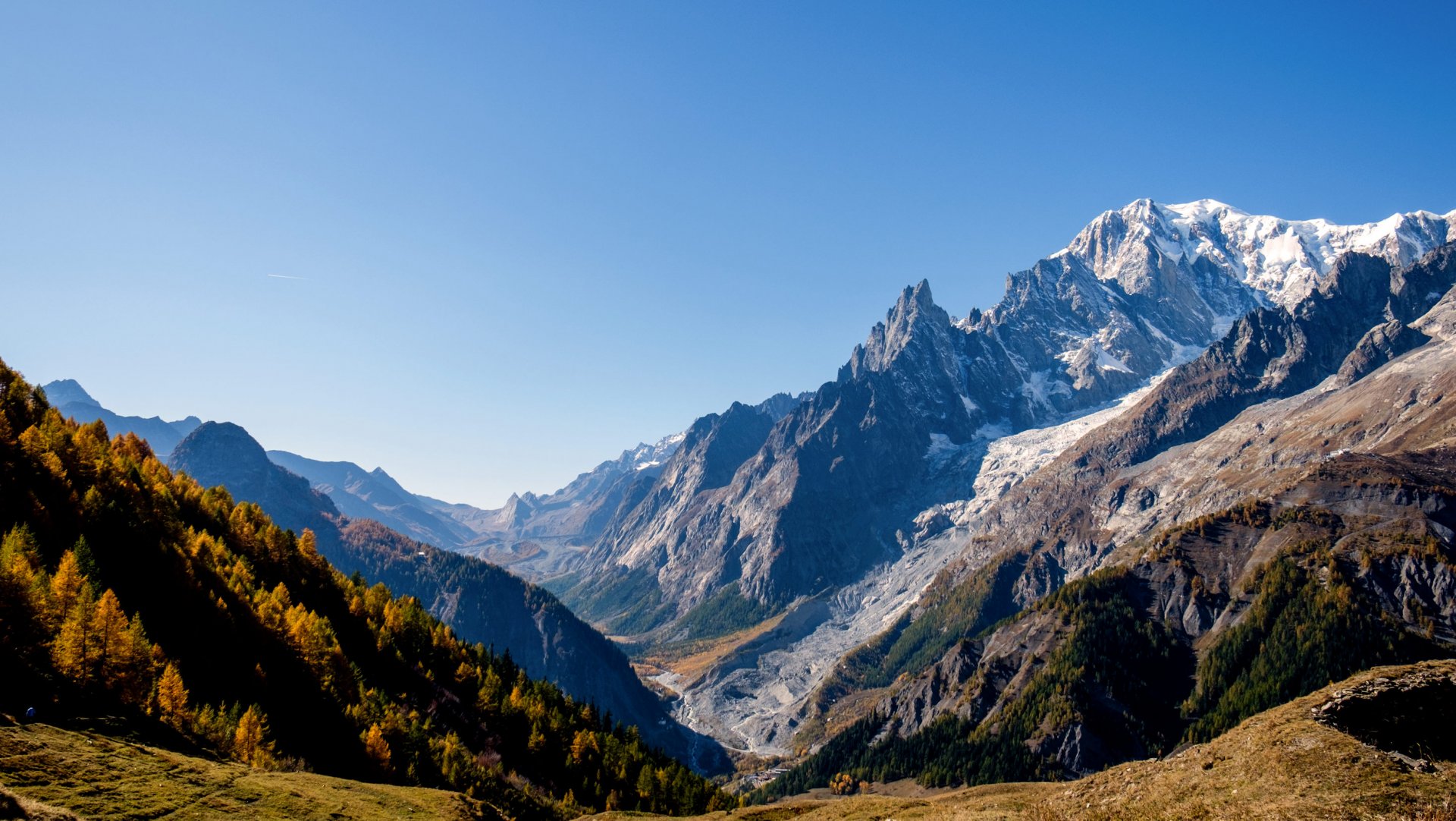
From La Fouly (1,700 m / 5,577 ft), we head towards the Grand Col Ferret (2,537 m / 8,323 ft), on the border between Switzerland and Italy. We pass beneath Mont Dolent (3,819 m / 12,530 ft), an iconic peak where France, Switzerland and Italy meet, before discovering the southern side of the Mont Blanc massif. The descent into the Italian Val Ferret offers views of the Pré de Bar and Miage glaciers. Transfer and overnight in a hotel.
Elevation gain: 900 m (2,950 ft) - Elevation loss: 750 m (2,460 ft) - Distance: 14 km (8.7 miles)
Day 5
Pointe Helbronner | Skyway Monte Bianco
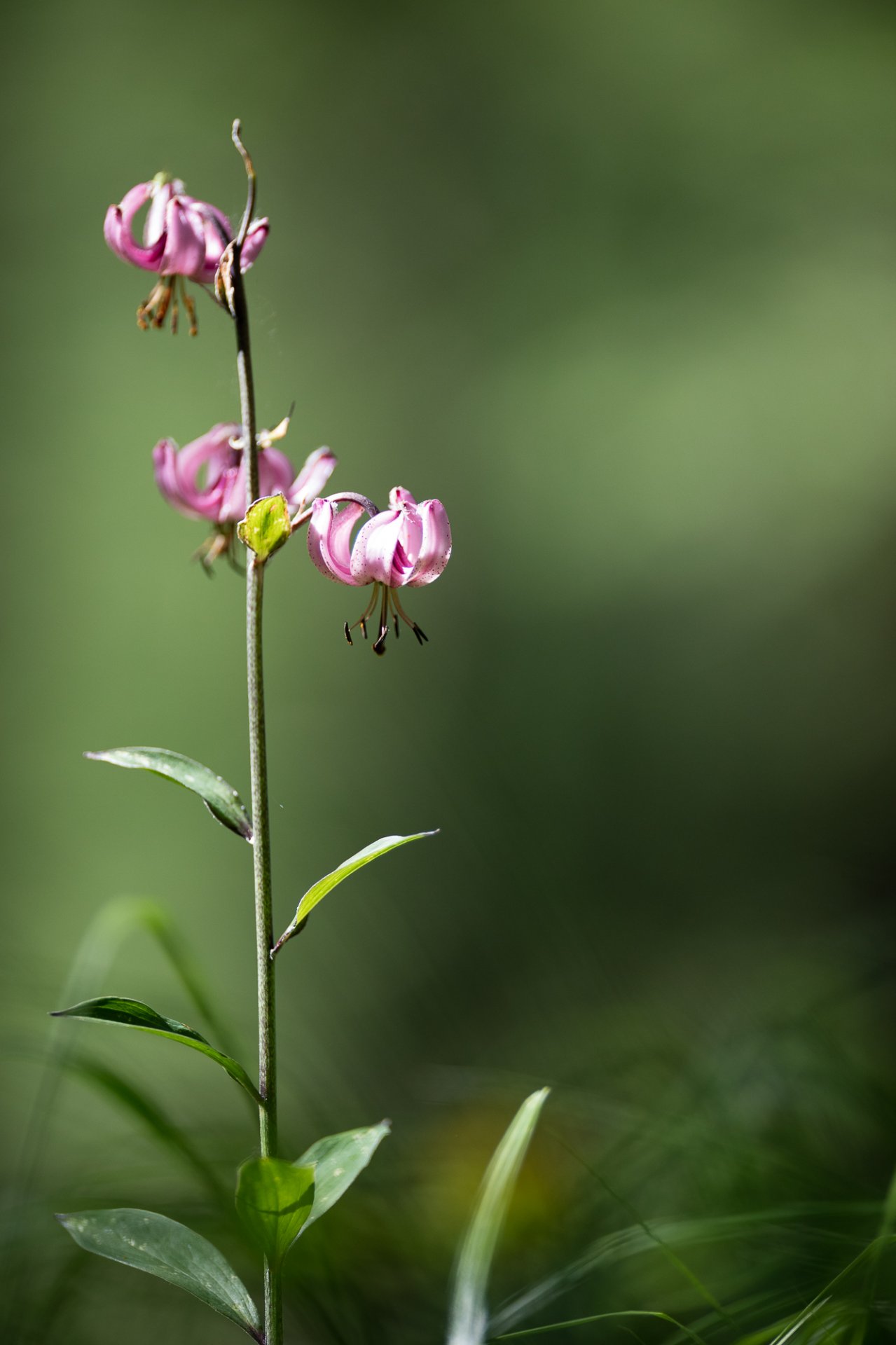
We take the Skyway Monte Bianco cable car for an exceptional day in the high mountains. From Pointe Helbronner (3,462 m / 11,358 ft), we enjoy spectacular panoramic views of the Mont Blanc massif, including the Dent du Géant (4,013 m / 13,166 ft), Mont Blanc (4,810 m / 15,781 ft), Mont Maudit (4,465 m / 14,649 ft) and Mont Blanc du Tacul (4,187 m / 13,737 ft). On the way back, we visit the Mont Fréty Alpine Botanical Garden (2,174 m / 7,133 ft) to discover the region's alpine flora. Return to our hotel. Dinner at your own expense.
Day 6
Val Veny & Beaufortain
From La Visaille (1,660 m / 5,446 ft), we hike up Val Veny alongside Lac Combal and its winding streams, their milky waters coloured by glacial sediment. The trail leads us to Rifugio Elisabetta, then to the Col de la Seigne (2,516 m / 8,255 ft), marking the border between Italy and France. We then descend through the alpine pastures of the Beaufortain, where herds of Tarine cattle graze, easily recognised by their reddish-brown coats. Transfer and overnight in a hotel.
Elevation gain: 900 m (2,950 ft) - Elevation loss: 750 m (2,460 ft) - Distance: 15 km (9.3 miles)
Day 7
Val Montjoie
We begin the day with a climb through alpine pastures to the Col de la Croix du Bonhomme (2,479 m / 8,133 ft). We then continue to the Col du Bonhomme (2,329 m / 7,641 ft), where a beautiful natural terrace invites us to stop and admire the panorama. We then begin our descent through the Contamines-Montjoie Nature Reserve to reach our mountain hut. You will not have access to your transferred luggage for this night.
Elevation gain: 900 m (2,950 ft) - Elevation loss: 600 m (1,970 ft) - Distance: 13 km (8.1 miles)
Day 8
Bionnassay Valley
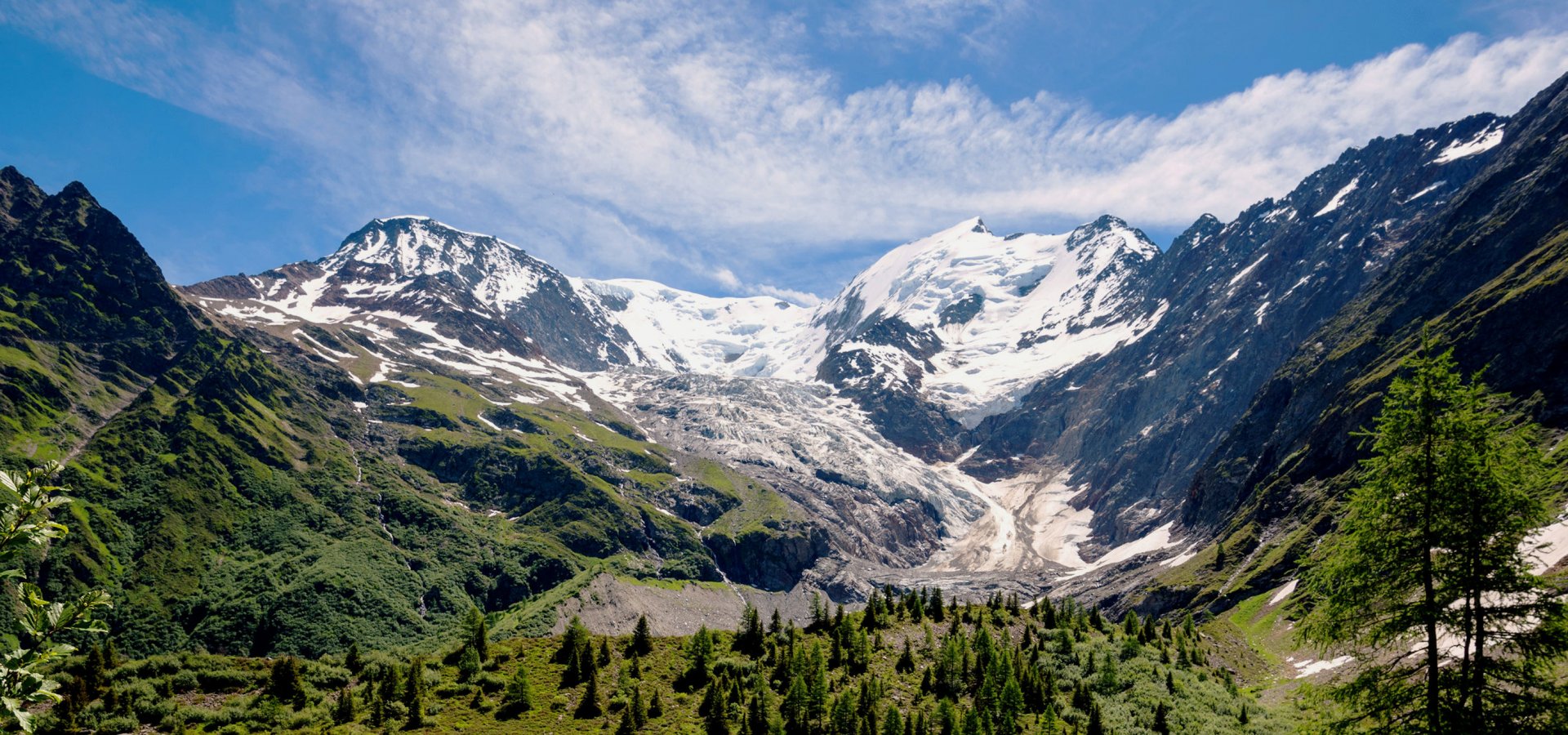
We reach Notre-Dame-de-la-Gorge (1,500 m / 4,921 ft) along its historic Roman road. A short transfer takes us to the village of Champel (1,205 m / 3,953 ft), where we begin our final hike through the Bionnassay Valley. We follow wooded slopes, passing several waterfalls and mountain streams, before reaching Bellevue (1,800 m / 5,906 ft). One last panorama of Chamonix and the surrounding peaks awaits us before we take the cable car down into the valley. Transfer back to Chamonix. End of our trip.
Elevation gain: 700 m (2,300 ft) - Elevation loss: 800 m (2,625 ft) - Distance: 12 km (7.5 miles)
×
Booking
Book your activity
FAQ
Itinerary – Difficulty Level
What level of fitness is required to complete the Tour du Mont Blanc?
The Tour du Mont Blanc requires a good level of fitness and experience of walking for several days in a row. Depending on the stages, you’ll generally need to walk between 5 and 8 hours a day, with both ascents and descents. The trails are well-maintained and do not present any major technical difficulties, but the consecutive days of walking make it a demanding challenge. Regular training before you set off will ensure you get the most out of your trip.
Do you need to be fit before setting off?
Yes. Regular hiking or endurance training is strongly recommended before setting off on the TMB. The difficulty lies less in the technical nature of the route and more in the repeated physical exertion over several consecutive days. We advise you to go for regular walks in the weeks leading up to your departure, ideally with a small rucksack and on hilly terrain.
Is the Tour du Mont Blanc difficult?
The full route covers around 170km / 106 miles and involves a cumulative elevation gain of nearly 10,000m / 32,808ft. Some days involve between 800m / 2,624ft and 1,500m / 4,921ft of ascent, with some steep descents at times. The main challenge lies primarily in the length of the trip and your ability to complete the stages day after day. We offer several options to tailor the experience to each person’s ability and expectations.
How many kilometres / miles is the Tour du Mont Blanc?
The full route is approximately 170km / 106 miles long and involves a cumulative elevation gain of nearly 10,000m / 32,808ft, which equates to 10 days’ walking on our full tour. We also offer other tours lasting 6 to 8 days, including transfers, so you can enjoy the experience to the full without having to walk the entire route on foot.
How far do we walk each day?
Depending on the stage, you can expect to walk between 12km / 7.5 miles and 25km / 15.5 milrs a day, with an elevation gain of between 800m / 2,624ft and 1,500m / 4,921ft. The duration of each stage generally varies between 5 and 8 hours’ walking, depending on the group’s pace and the terrain. Some days may be more demanding than others.
When is the best time to do the Tour du Mont Blanc ?
The Tour du Mont Blanc is usually undertaken from mid-June to the end of September. June often offers quieter trails and landscapes ablaze with flowers, but some high-altitude sections may still be covered in snow. July and August offer the most stable conditions, whilst September brings a more peaceful atmosphere and the first hints of autumn colours.
Is it possible to avoid the crowds on the Tour du Mont Blanc?
The Tour du Mont Blanc is a very popular route in summer due to its international reputation. June and September are often quieter, but you will almost always come across other walkers on the trails. If you’re looking for a wilder and more secluded experience, we also offer less-frequented routes in the mountain ranges around the Mont Blanc.
In which direction is the Tour du Mont Blanc walked?
The Tour du Mont Blanc is usually walked in an anti-clockwise direction: France, Italy and then Switzerland, before returning to Chamonix. This direction follows the historic route and allows for a natural progression through the stages. It is also possible to walk it in a clockwise direction in order to encounter fewer walkers during the day.
At what age can a child take part in the Tour du Mont Blanc?
Even if your child is fit and active, we generally recommend waiting until they are 8 to 10 years old to get the most out of a multi-day trek. Mountain hiking requires stamina and a certain degree of independence. We also offer trips specially designed for families and children, so they can explore the mountain range in the best possible conditions.
Accommodation – Comfort
Which package should you choose for the Tour du Mont Blanc?
We offer several ways to experience the TMB, all with a guide: an authentic mountain-hut experience with no luggage transfer; a comfort package in hotels with luggage transfer; or a premium stay in high-end hotels with luggage transfer. Each itinerary is designed to offer an experience tailored to your fitness level, the time you have available and the level of comfort you’re looking for.
Where do we stay during the trip?
The level of comfort varies depending on the package chosen:
- Our premium trips offer double rooms with en-suite bathrooms and toilets (unless otherwise stated in the itinerary).
- Our comfort packages include nights in double rooms, sometimes with shared bathroom facilities.
- On our authentic packages, accommodation is mainly in mixed-sex dormitories with shared bathroom facilities.
Is the standard of comfort in a mountain refuge the same as in a hotel?
No. Mountain refuges prioritise welcoming hikers in areas that are sometimes remote, where resources remain limited. Dormitory-style accommodation, shared toilet facilities, no Wi-Fi and limited shower facilities may all be part of the experience. In return, you’ll enjoy a unique immersion in the heart of the Mont Blanc massif and the warm, welcoming atmosphere that’s unique to the mountains.
Can I have a single room?
For ‘Comfort’ and ‘Premium’ stays, a single room may be available at an additional cost, subject to availability. This option is not available on our ‘Authentic’ mountain hut packages, which include shared dormitories.
Will I share my room with someone of the same sex if I’m travelling alone?
We cannot guarantee that you will be paired with someone of the same sex, particularly in shared accommodation and dormitories. As groups are formed based on bookings, room allocation depends on availability at the time of your stay.
Are there showers every evening?
Most accommodation options have them, but not all. In hotels, there are always showers, which may be shared depending on the package. Some mountain huts do not have sufficient water supplies to offer this service.
Should I bring earplugs?
Yes, especially in mountain huts or dormitories. After several days of hiking, a good night’s sleep is essential for proper recovery. Shared accommodation can sometimes be noisy, and earplugs often make for a much more comfortable night’s sleep in the mountains.
Equipment – Luggage
Do I have to carry my rucksack during the trip?
Yes. You will always carry your daypack: water, warm clothes, rainwear and a packed lunch. Some packages include the transfer of the rest of your luggage between accommodation stops. Even with a transfer, it is important to keep the weight of your daypack reasonable.
How much should my rucksack weigh?
On a multi-day hike, a lightweight rucksack greatly improves walking comfort. Weight quickly becomes the hiker’s enemy as the days go by. We therefore advise you to limit your kit to the essentials and to prioritise equipment suitable for the mountains.
How can I make my rucksack more comfortable?
We advise you to choose a rucksack suited to your body shape and adjusted correctly. Remember to test it before you set off so you can adjust the fit properly. In the mountains, every gram counts: lightweight, well-organised kit will allow you to walk more comfortably over several days.
What sort of bag should you use for luggage transfers?
A soft bag, such as a travel bag or sports bag, is recommended. The maximum weight allowed is 15 kg / 33 lb / 2.5 stone per item to facilitate transfers. Hard-shell suitcases are not permitted. Fragile items and valuables are not accepted in luggage. Neither the carrier nor the Compagnie des Guides can be held responsible for any loss, damage or theft.
What sort of footwear should you bring?
High-top walking boots that you’ve already worn, which fit your feet well and provide good grip, are essential. We advise you to try them out before you set off to avoid blisters and aches and pains during your trip. Comfortable footwear remains one of the most important pieces of kit.
Do I need walking poles?
Yes, walking poles are strongly recommended to take the strain off your knees, improve your balance and reduce fatigue on descents. They also provide greater comfort on long stages and help distribute the effort more evenly.
How can I avoid blisters?
Wear shoes that have already been broken in, keep your feet dry and avoid carrying bags that are too heavy. Also, remember to air your shoes every evening after walking and to pack socks suitable for multi-day hikes.
What clothing should you pack?
The weather in the mountains changes quickly, even in the height of summer. We recommend packing breathable, warm and waterproof clothing so that you can easily adapt to the different conditions you’ll encounter during your trip. The equipment list provided for each hike has been drawn up in consultation with our guides.
Does the Compagnie des Guides have equipment rental and outdoor gear partners?
Yes. When you book with the Compagnie des Guides de Chamonix, you can benefit from discounts with several of our partners:
Equipment rental partners: Millet, Ravanel & Co, Sanglard Sports and Concept Pro Shop
Equipment partners: Millet, Dynastar, Julbo, Grivel and Monnet
Weather – Safety
What is the weather like on the TMB?
Even in summer, it can be hot in the valleys and cold at higher altitudes. Mountain weather can change rapidly, and you may still encounter rain, wind or even snow, depending on the conditions. We therefore advise you to bring kit suitable for all situations.
Could it snow during the trip?
Yes. Even in the height of summer, there may be occasional snowfall on certain high-altitude sections. These conditions are usually short-lived but serve as a reminder that the TOUR DU MONT BLANC is, first and foremost, a mountain route.
Will the trip be cancelled if it rains?
No. Rain does not lead to the cancellation of the trip, and we advise you to bring a full set of good-quality rainwear. However, if conditions become unfavourable for the group’s safety, the guide may adjust the timetable or alter certain stages.
Is the Tour du Mont Blanc dangerous?
The Tour du Mont Blanc remains a mountain route that requires preparation and caution. Being accompanied by a professional ensures you can hike in the safest possible conditions and allows the programme to be adapted if necessary. As with any mountain activity, it is important to follow the guide’s instructions.
Practical Information
How do I get to Chamonix?
Chamonix can be reached by train, by car or via the airports in Geneva, Lyon and Turin. We recommend that you plan to arrive the day before your departure so that you can start your holiday feeling more relaxed. Find all the information you need on the Chamonix town website.
Where can I park my car for several days in Chamonix?
The town of Chamonix offers several parking options for multi-day stays. You can find all the information on the official Chamonix website.
Can I leave my luggage in Chamonix?
Yes. Several luggage storage services are available in Chamonix to look after your luggage whilst you’re on your trek. Some hotels also offer a luggage storage service for their guests.
Is the water safe to drink along the route?
There are some drinking fountains where you can fill your water bottles whilst trekking, but we recommend always asking your guide for advice before drinking the water. The availability of water varies depending on the stage of the trek and the level of drought (dryness of the conditions).
Is there mobile phone coverage during the trek?
Some mountain areas are not covered by the mobile network. Wi-Fi is available in some accommodations but can sometimes be limited at high altitudes. The Tour du Mont Blanc is also an opportunity to enjoy a proper break from the digital world.
Can I charge my mobile phone?
Mobile phone charging is not guaranteed in all the mountain huts. A power bank is strongly recommended, particularly for stays in huts and long stages without easy access to electricity. Also bring a suitable power adapter for use in France, Italy and Switzerland.
Are vegetarian meals available?
Yes. Please let us know about any specific dietary requirements or allergies when you book, so that the accommodations and restaurants can take these into account when preparing meals. We will always do our utmost to accommodate your needs.
Can I bring my dog?
No. The natural areas we pass through and the majority of accommodations do not allow dogs, in order to protect the wildlife and ensure the group’s peace and quiet. Nor can the guides manage the logistical challenges posed by having dogs on the trek.
What happens if I get too tired during the trip?
A multi-day hike remains physically demanding, and it is important to be properly prepared before setting off. If a participant is unable to continue a stage of the trek, the guide will help them find a suitable solution, but any transport costs will be their responsibility.
What time does the trip end?
The return time depends on the group’s pace, the weather and trail conditions. If you need to organise your return journey, we advise you to arrange flexible transport or an extra night’s accommodation in Chamonix.
How can I pay for personal expenses during the trip?
Hotels and shops in the valleys accept credit and debit cards. In mountain huts, it is preferable to carry cash for personal expenses. We recommend obtaining euros and Swiss francs in advance to avoid repeated currency exchange fees.
Booking – Cancellation
Why choose the Compagnie des Guides de Chamonix
The Compagnie des Guides de Chamonix is a not-for-profit organisation deeply rooted in its local area and Alpine culture. Since 1821, it has developed its expertise in mountain guiding and played an active role in the life of the Chamonix valley. Choosing the Compagnie means being guided by mountain professionals who are part of a tradition rooted in the Mont Blanc region for over 200 years.
What is included in my trip?
Unless otherwise stated in the itinerary, our trips include pre-trip organisation, guidance from a qualified professional, half-board accommodation and packed lunches from the first to the last day. Full details of the services included can be found under the ‘Price includes’ section of each programme.
What happens if there aren’t enough people booked on my trip?
If the minimum number of participants required to confirm the trip is not reached, our teams will contact you as soon as possible. You can then choose to join another guaranteed departure or receive a refund of the amount paid in accordance with our General Terms and Conditions of Sale.
What deposit is required to book a holiday?
For all bookings, a deposit of 30% of the total cost of the trip is required. Your booking will be confirmed upon receipt of payment.
When do I need to pay the balance for my holiday?
The balance must be paid no later than 30 days before the start of your trip. If we do not receive payment from you, the amount may be automatically debited from the credit card used at the time of booking.
How long do I have to book?
Bookings close 30 days before departure for trips of more than 6 days and 15 days before departure for trips of less than 6 days. After this deadline, please contact us: booking is only possible if there are still places available in the accommodations.
Does the Compagnie des Guides offer assistance and repatriation insurance?
Yes, you can purchase assistance, repatriation and cancellation insurance when you register. You must be a resident of one of the following countries: Germany, Andorra, Austria, Belgium, Bulgaria, Cyprus, Croatia, Denmark, Spain, Estonia, Finland, France (including DOM-ROM-COM), Gibraltar, Hungary, Greece, Ireland, Italy, Liechtenstein, Latvia, Lithuania, Luxembourg, Malta, the Principality of Monaco, Norway, the Netherlands, Poland, Portugal, Romania, the United Kingdom, Slovakia, Slovenia, the Czech Republic, San Marino, Sweden or Switzerland.
Residents of other countries are advised to purchase assistance, repatriation and cancellation insurance from an insurance provider of their choice.
What happens if I leave the trip of my own accord?
Any voluntary interruption of the trip on your part will not entitle you to a refund for any unused services. We recommend that you take out suitable insurance before departure.
Does the Compagnie des Guides have hotel partners?
Yes. The Compagnie des Guides de Chamonix works with several hotel partners in Chamonix where you can benefit from preferential rates: La Folie Douce Hotels, RockyPop, Le Prieuré, Plan B and Les Aiglons. The conditions for benefiting from these rates are specified in your booking contract.
Calculate your carbon footprint
Discover the carbon emissions of this activity and add your trip to the meeting point.
CO2 emitted per person for the activity: 337 kg. Learn out more about the footprint calculation of this activity
CO2 emitted per person for the activity: 337 kg. Learn out more about the footprint calculation of this activity
CO2 emitted per person for this activity & journey(s) = 0 kgIn order to limit global warming to +2°C by 2100, the COP-21 agreement stipulates that each human should emit no more than 2t of CO2 per year. According to the French Ministry of Ecology, today European citizens emit an average of 11t per year, and American citizens emit an average of 21t annually., or 33.7€The price for a ton of CO2 is currently 100€ in the European Union to offset.
Find out more about our zero impact strategy.
x